Bridal Makeup Trial IN TORONTO: 10 Essential Tips | Makeup by Anu
"I don't want to look at my photos and not be able to recognize myself." It's something my clients tell me again and again, and it's exactly what a bridal makeup trial is for. Your trial isn't a test you pass or fail. It's a rehearsal: one calm, unhurried session where you and your artist figure out the look that feels like you, only polished, and make sure it lasts.
After 10+ years of styled shoots, film sets, and prestige beauty counters, I've learned that the trials that go best aren't luck. They come down to a little preparation.
Why a Bridal Makeup Trial Is More Than Just a Makeup Appointment
A bridal makeup trial is about more than choosing lipstick or eyeshadow. It's about making sure your overall look works for you, your outfit, and your wedding day. I've seen brides change their minds during trials. Sometimes, a small adjustment to the colour, finish, or intensity of a look can make all the difference in helping a bride feel like herself. That's the beauty of a trial: there's time to experiment, make adjustments, and find what feels right.
It's also an opportunity to see how your makeup looks in different lighting, how it photographs, and how it wears throughout the day. Most importantly, it gives you and your makeup artist time to communicate and build trust before the wedding.
With that in mind, here are 10 things to do before, during, and after your trial to help you feel confident about your wedding-day look.
Before your trial
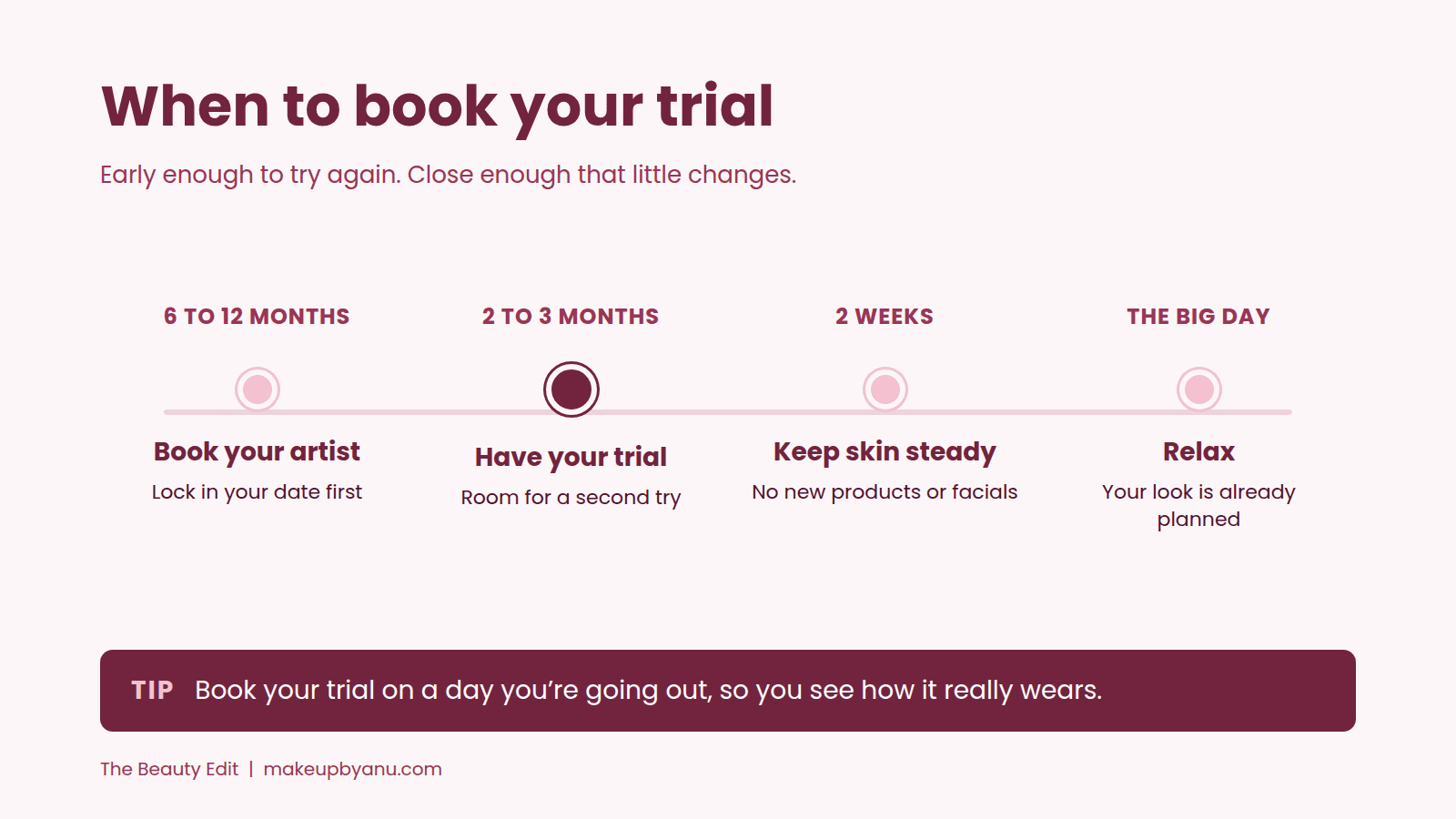
1. Book it two to three months out.
That's early enough to try a second look if the first one isn't quite right and close enough that your skin, hair colour, and style won't change much before the big day. If you have several events, like a mehndi, ceremony, and reception, ask whether your trial can cover more than one look.
Bonus tip: schedule your trial on a day you'll be out afterward, like a dinner or your engagement shoot. You'll see how the look wears in real life, not just in the chair.
2. Collect photos you love and a few you don't.
Save three to five looks you love, ideally on someone with a similar skin tone or eye shape. Then save one or two you definitely don't want. Knowing what you don't like is often more useful than knowing what you do.
3. Prep your skin, but don't experiment.
In the two weeks before your trial, keep your skincare routine steady. Drink water, moisturize well, and skip new products, facials, or strong exfoliants. Your trial should show how makeup sits on your everyday skin, not on skin that's reacting to something new.
Dermatologists agree. The American Academy of Dermatology suggests testing any new skincare product on a small spot twice a day for seven to 10 days before using it all over. L’Oréal Paris also recommends saving brand-new facials and treatments until after the wedding. If you really want to try something new, start it well before your trial, not the week of.
4. Wear a top with a similar neckline.
Makeup looks different against a white T-shirt than it does against a red lehenga or an ivory gown. Wear a top close to your outfit's colour and neckline so you can judge the whole picture, not just your face.
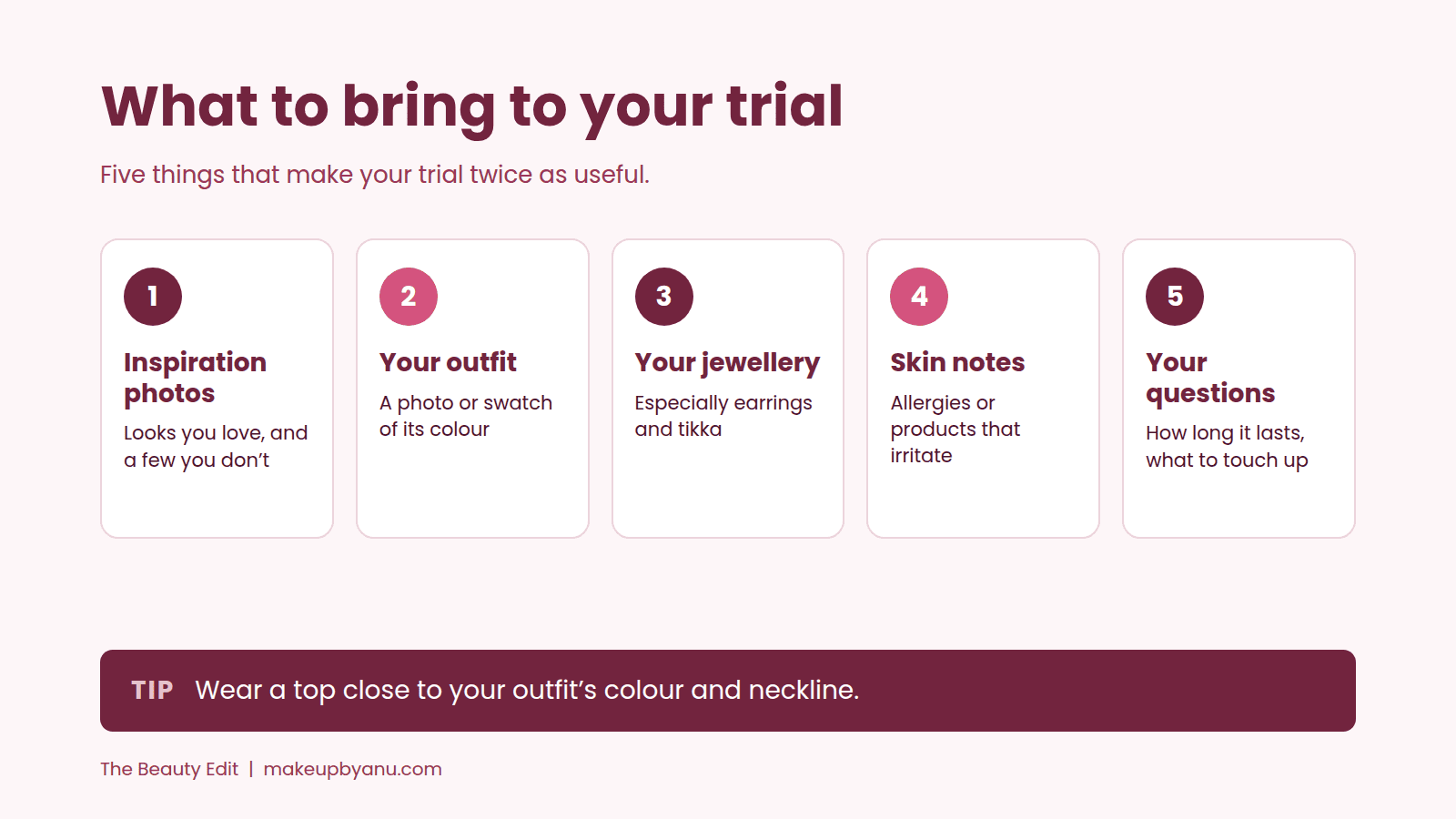
5. Bring these five things.
- Your inspiration photos, both the looks you love and the ones you don't
- A photo or swatch of your outfit, so your makeup suits its colour
- Your jewellery, or a photo of it, especially earrings and a maang tikka
- Notes on your skin, including any allergies or products that have irritated you
- Your questions, like how long the look will last and what to touch up
During your trial
6. Speak up, kindly and early.
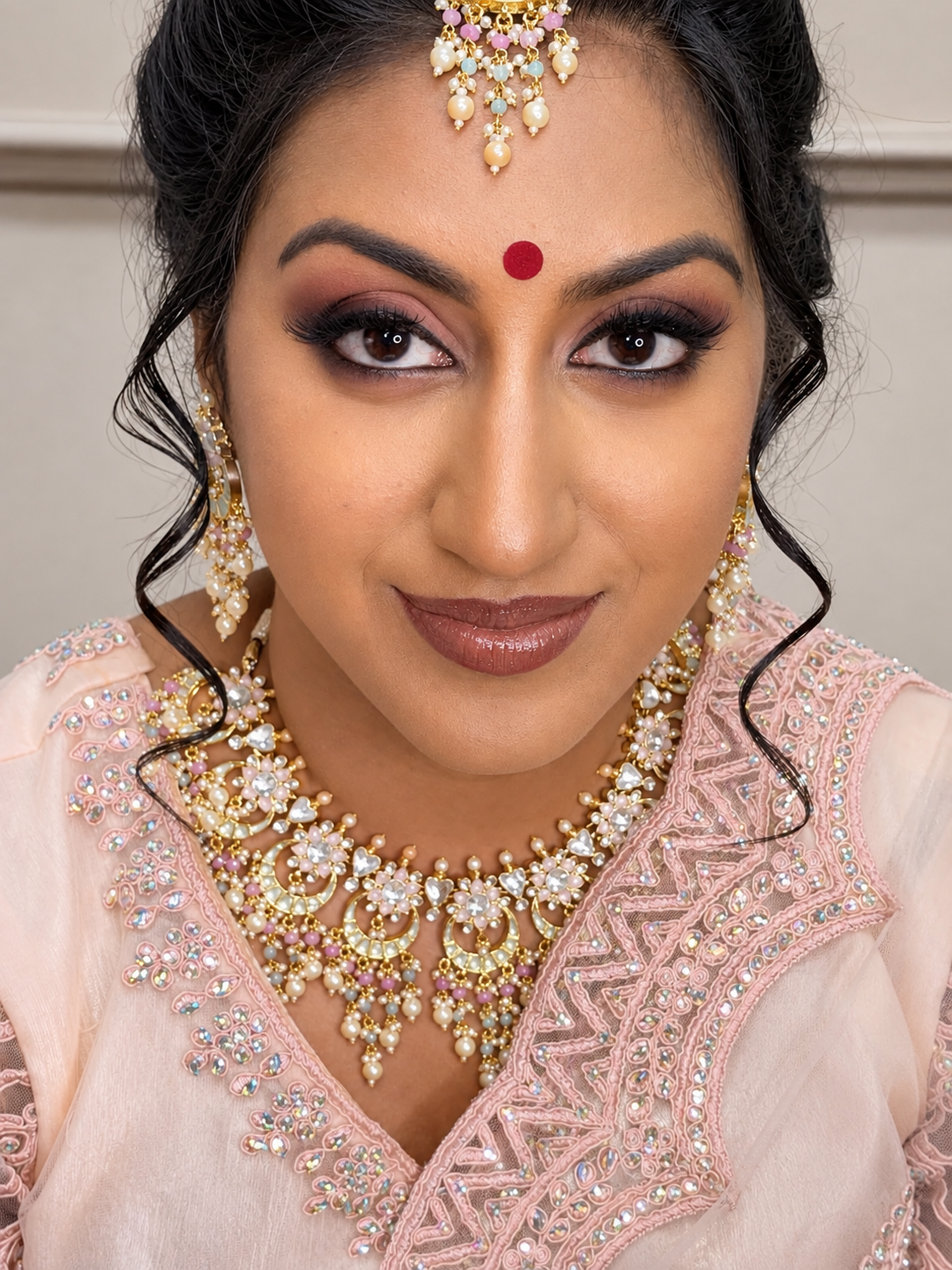
If something doesn't feel like you, say so while there's still time to change it. "Can we soften the liner?" is a completely normal thing to ask. A good artist wants your honest reaction, not polite silence. Glitter lids can look stunning in Reels, but your wedding look should be timeless, and your trial is where you decide what that means for you. One of my brides loved a shimmery pink eye at her trial, but she spoke up and chose a soft matte version for her wedding day. Same artist, same face, a look that felt more like her.
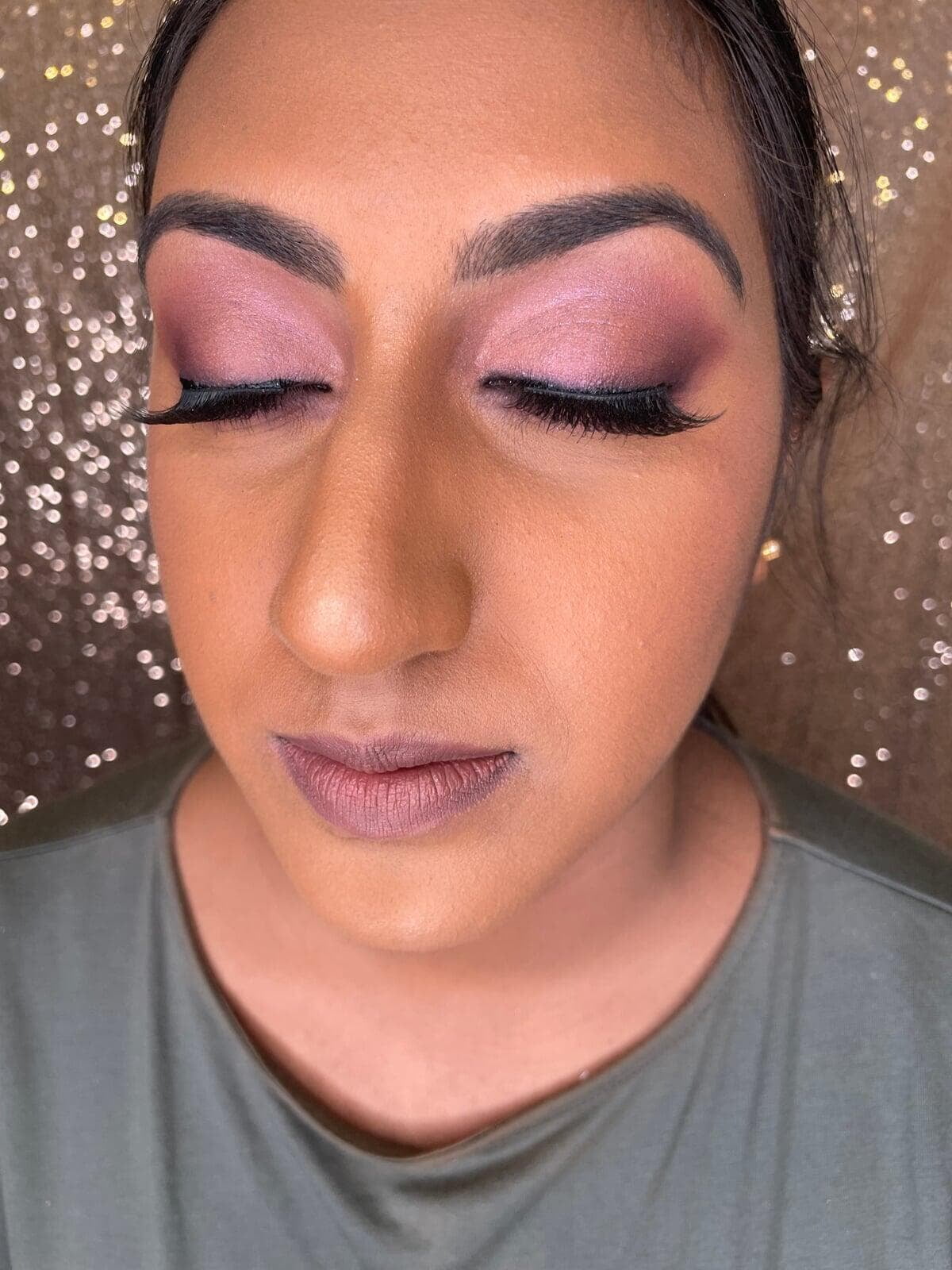
Left: Trial: shimmer pink eyes Right: Wedding day: soft matte eyes
7. Check the look in every light.
Look at your makeup in daylight by a window, under indoor lights, and in a photo with flash. Some products leave a white cast in flash photos, which you’d never notice in a mirror. Cosmetic chemist Michelle Wong explains why makeup flashback happens: silica, found in many translucent and “HD” powders, can bounce camera flash back as white patches. I’ve also written about how I plan makeup around lighting in what Halloween Horror Nights taught me about makeup that lasts.
8. Take photos from every angle.
Ask your artist or a friend to take photos from the front, both sides, and with flash. Your wedding photographer will capture you from every angle, so your trial photos should too. They'll also become your reference for the big day.
After your trial
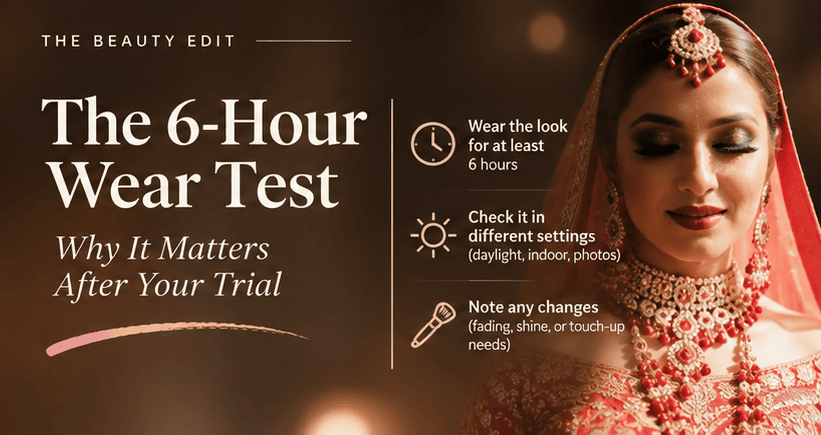
9. Live in the look for at least six hours.
The biggest trial mistake? Leaving before you've lived in the look. Don't wash it off the moment you get home. Wear it through a meal, a few hugs, and the afternoon light, then check it again in the evening. Notice where it fades, creases, or shines.
And if you're worried about crying during your ceremony, test that too. Gently dab the corners of your eyes with a tissue, as if you'd teared up, and see what moves. I aim to create makeup looks designed to last throughout the wedding day, but your trial is where you can see how the products perform on your skin. My makeup is built to last 10+ hours with no touch-ups, even through happy tears, but your trial is where you see it for yourself.
10. Lock it in.
Within a day or two, send your artist your feedback: what you loved and anything you'd adjust. Save your best trial photos in one album, and note any changes you agreed on. That album becomes the plan for your wedding morning, so nothing is left to memory on a busy day.
Breathe! You're right on time
A bridal makeup trial isn't about getting everything perfect on the first try. It's about walking into your wedding morning already knowing you'll love what you see. Prepare a little, speak up, and give the look time to prove itself.
Here’s how that bride’s wedding-day look came together (from a 2021 wedding):
Sources
- How to Test Skin Care Products, American Academy of Dermatology
- Skin Care Mistakes to Avoid Before Your Wedding, L’Oréal Paris
- Why Makeup Flashback Happens and How to Avoid It, Lab Muffin Beauty Science
Frequently Asked Questions About Bridal Makeup Trials
1. How far in advance should I book a bridal makeup trial?
Ideally, schedule your bridal makeup trial two to three months before your wedding. This gives you enough time to try a second look if the first one isn't quite right while keeping your trial close enough to the wedding that your skin, hair colour, and personal style are unlikely to change significantly.
If you're planning multiple wedding events, such as a mehndi, ceremony, and reception, ask your makeup artist whether your trial can accommodate more than one look.
2. What should I bring to my bridal makeup trial?
A little preparation can make your bridal makeup trial much more productive. I recommend bringing these five things:
Inspiration photos of looks you love (and don't love).
A photo or fabric swatch of your wedding outfit.
Your jewellery, especially earrings and maang tikka.
Notes about your skin, allergies, or products that have caused irritation.
Questions about makeup longevity and touch-ups.
These details help your makeup artist understand your preferences and create a look that complements your features, outfit, and overall bridal vision.
3. How long does a bridal makeup trial take?
A bridal makeup trial isn't something to rush. Depending on the complexity of the look and any adjustments needed, it can take anywhere between 2–4 hours. It's your opportunity to discuss what you love, explore different looks, and make adjustments along the way. Take the time to see how the makeup feels and looks on you. You should leave feeling comfortable, confident, and happy with the look we've created together.
4. Should I wear my wedding outfit to the bridal makeup trial?
You don't necessarily need to wear your complete wedding outfit. However, I recommend wearing a top with a similar neckline and bringing a photograph or fabric swatch of your wedding outfit.
Makeup can look quite different against an ivory gown compared with a red lehenga. Having your outfit's colour and neckline as a reference helps you see the overall picture rather than judging your makeup in isolation.
If possible, bring your wedding jewellery or a photograph of it too.
5. What happens if I don't like my bridal makeup trial?
That's exactly what your trial is for!
If something doesn't feel right, speak up early. Perhaps you'd prefer softer eyeliner, a different lip colour, or a more subtle eye look. Honest feedback gives your makeup artist the opportunity to make adjustments before your wedding day.
I remember one bride who initially loved a shimmery pink eye look during her trial. After seeing it, she decided that a softer matte finish felt more like her. We made that adjustment for her wedding day.
Within a day or two of your trial, share your final feedback with your makeup artist and save your favourite photographs. This gives you both a clear reference for the wedding morning.
If you're planning a wedding in Toronto or the GTA, I'd love to be part of it. I offer bridal makeup trials across Toronto, Mississauga, Brampton, and Oakville. Book your consultation and we'll create a look that feels like you, only polished.
What's your biggest question about your bridal makeup trial? Ask me in the comments, and I might answer it in a future post.
Anu Taneja is a GTA makeup artist with 10+ years of experience across prestige beauty brands, film and editorial work, and the founder of MakeupbyAnu.